

Background and Knowledge gap
Migratory birds are known to obtain information from the geomagnetic field to perform orientation and navigation tasks. While the physiological mechanisms underlying the magnetic sense remain uncertain, it is widely accepted that birds rely on two distinct magnetoreception systems: a chemical magnetoreceptor located in their eyes and a magnetite-based receptor, likely situated in the upper beak. The chemical magnetoreception system is thought to function as a magnetic compass for orientation tasks, while the iron-based magnetoreceptor may contribute to the magnetic map used in navigation. The most well-developed and widely discussed hypothesis suggests that the magnetic sense is based on spin-dependent photochemical reactions (the Radical Pair Mechanism). According to this theory, oscillating magnetic fields (OMFs) can destroy the ability to orient using the magnetic compass.
Our plans
In this project, we continue our investigation of the avian magnetic compass, focusing on how changes in magnetic field parameters and light spectrum/intensity interact with the non-orientation behaviours of songbird species. These studies are conducted under lab-controlled conditions, utilising machine learning/neural network tools for analysis
Our discoveries
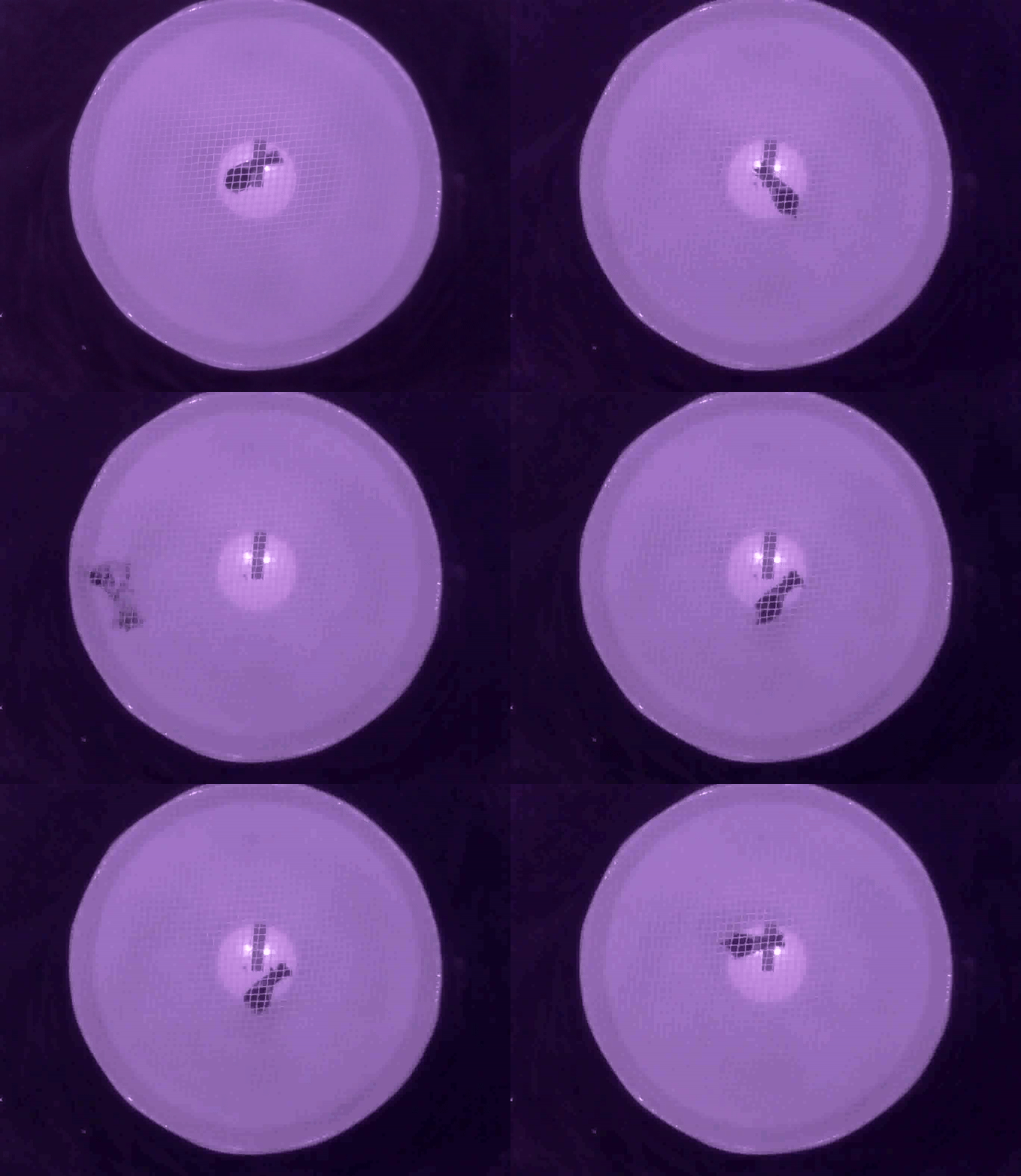
Our experimental setups



 Animal Navigation Lab