


with Ornithology Lab (PI Nikita Chernetsov).
About project
Project PI: Nikita Chernetsov
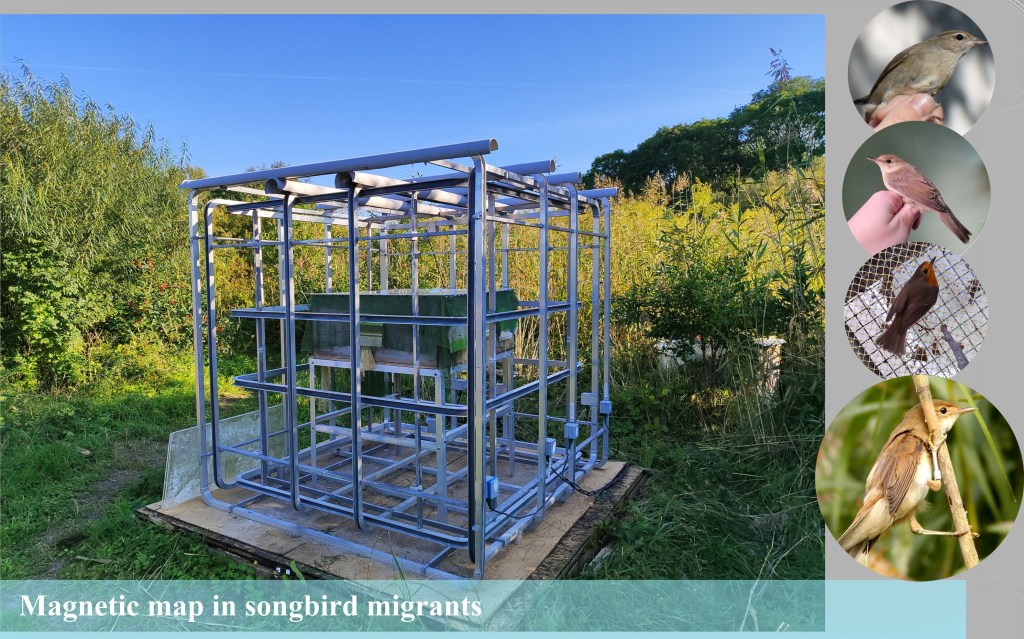
Every year, millions of birds undertake an incredible journey from their breeding grounds to wintering sites. Most small passerine birds migrate alone at night. How do naïve songbirds manage to reach locations hundreds or even thousands of kilometres away from where they were born without a fully developed navigation system? How does their navigation system develop and update throughout the journey, and what are the components of their navigational map? These are the key questions this project seeks to answer.
Our discoveries
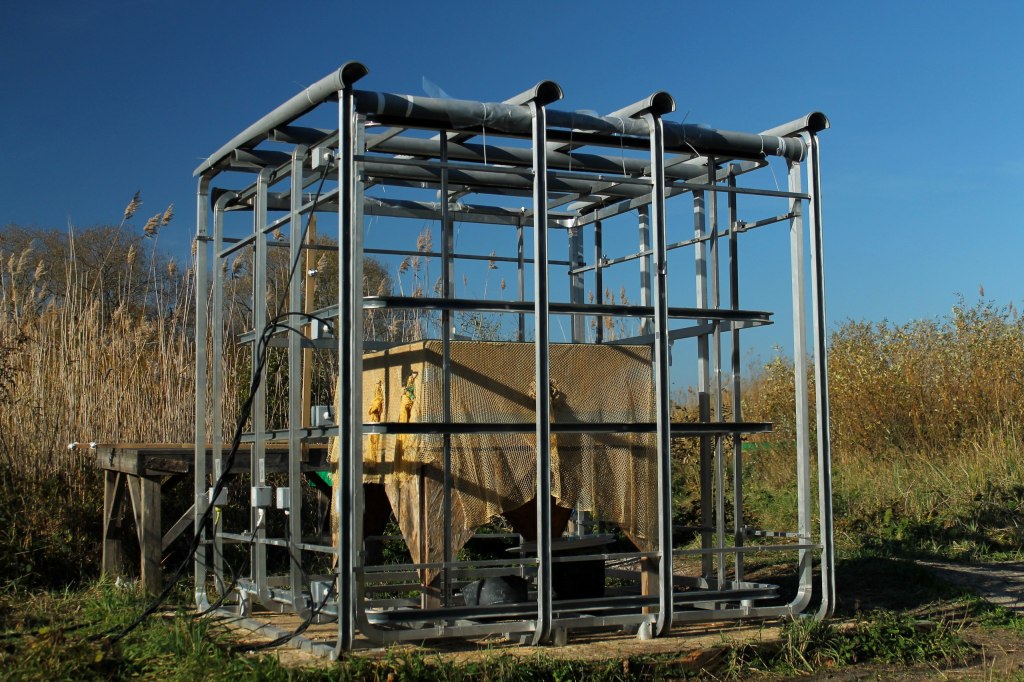
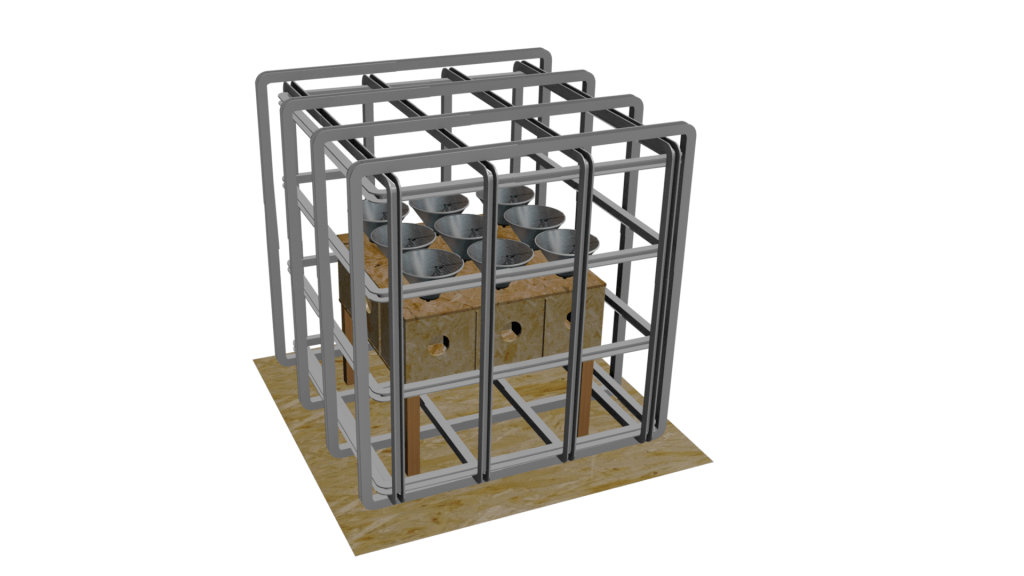
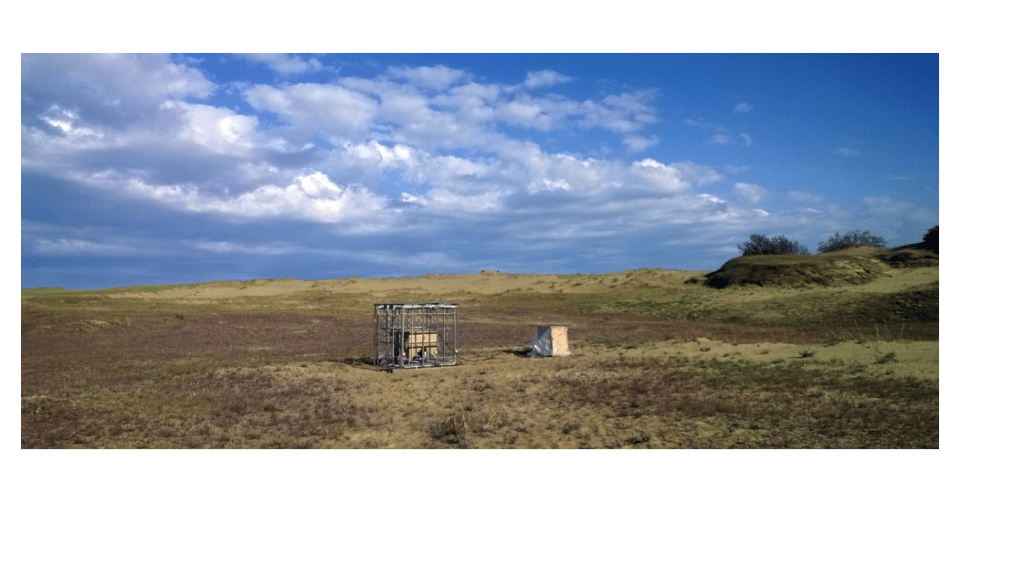
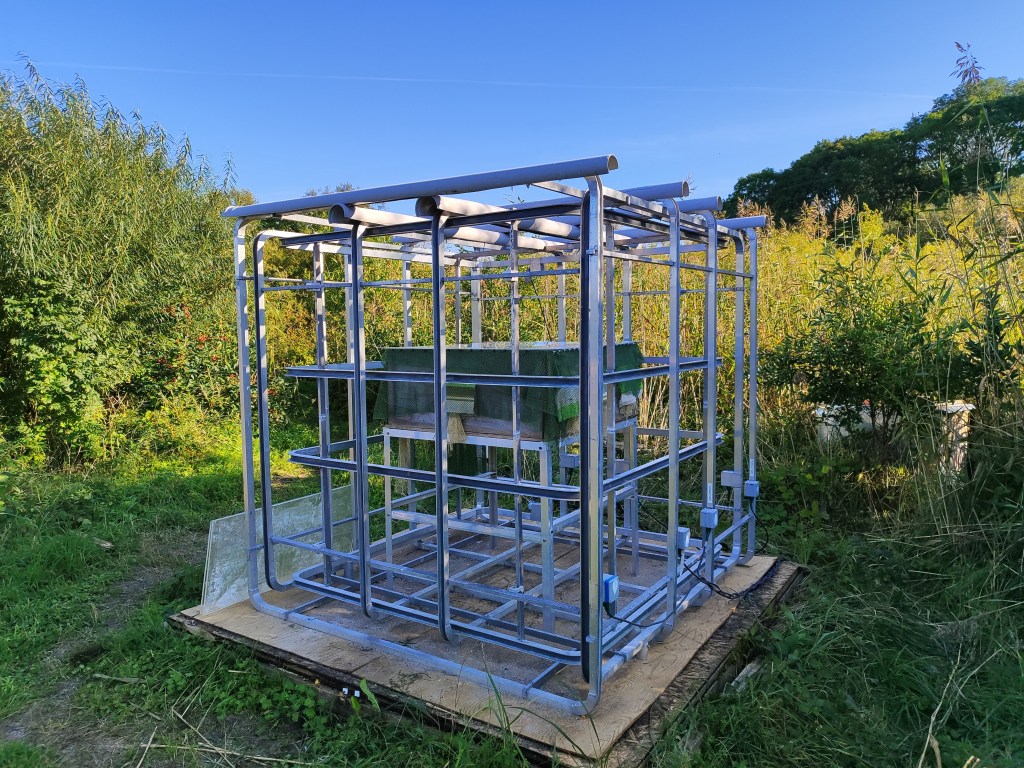
Our experimental setups
Key papers:
- Utvenko, G., Gorvat, P., Solopova, A., Pakhomov A., Chernetov N, 2026. Magnetic cues and refuelling in thrush nightingales (Luscinia luscinia): a 25-year-old hypothesis revisited // Behav Ecol Sociobiol 80, 116. doi: 10.1007/s00265-026-03792-8|
- Utvenko G, Gorvat P, Grebenkova A, Pakhomov A, Chernetsov N, 2025. Magnetic orientation of marsh warblers (Acrocephalus palustris) and spotted flycatchers (Muscicapa striata) after simulated crossing of the magnetic equator // The Journal of Experimental Biology 228 (3): JEB248169. doi: 10.1242/jeb.248169
- Chernetsov N, Pakhomov A, Davydov A, Cellarius F, Mouritsen H, 2020. No evidence for the use of magnetic declination for migratory navigation in two songbird species // PLOS ONE 15(4): e0232136. doi: 10.1371/journal.pone.0232136
- Pakhomov A., Anashina A., Heyers D., Kobylkov D., Mouritsen H., Chernetsov N., 2018. Magnetic map navigation requires input from the trigeminal nerve in a migratory songbird // Scientific Reports 8: 11975. doi: 10.1038/s41598-018-30477-8
- Chernetsov N., Pakhomov A., Kobylkov D., Kishkinev D., Holland A. R., Mouritsen H., 2017. Migratory Eurasian reed warblers can use magnetic declination to solve the longitude problem // Current Biology, 27 (17): 2647–2651. doi: 10.1016/j.cub.2017.07.024
- Kishkinev D., Chernetsov N., Pakhomov A., Heyers D., Mouritsen H., 2015. Eurasian reed warblers compensate for virtual magnetic displacement // Current Biology, 25 (19): R822–R824. doi: 10.1016/j.cub.2015.08.01
- Kishkinev D, Chernetsov N, Heyers D, Mouritsen H, 2013 Migratory Reed Warblers Need Intact Trigeminal Nerves to Correct for a 1,000 km Eastward Displacement // PLoS ONE 8(6): e65847. doi: 10.1371/journal.pone.0065847
- Kishkinev D, Chernetsov D, Mouritsen H, 2010. A Double-Clock or Jetlag Mechanism is Unlikely to be Involved in Detection of East—West Displacements in a Long-Distance Avian Migrant // The Auk, Volume 127, Issue 4, 1 October 2010, Pages 773–780, doi: 10.1525/auk.2010.10032
- Nikita Chernetsov Dmitry Kishkinev, Henrik Mouritsen, 2008. A Long-Distance Avian Migrant Compensates for Longitudinal Displacement during Spring Migration // Current Biology, Volume 18, Issue 3, 188 – 190. doi: 10.1016/j.cub.2008.01.018
Related papers:
- Packmor Florian,Kishkinev Dmitry, Zechmeister Thomas, Mouritsen Henrik and Holland Richard A. 2024. Migratory birds can extract positional information from magnetic inclination and magnetic declination alone Proc. R. Soc. B.291rspb20241363 doi: 10.1098/rspb.2024.1363
- Kishkinev, D., Packmor, F., Zechmeister, T., Winkler, H.-C., Chernetsov, N., Mouritsen, H. and Holland, R. A. (2021). Navigation by extrapolation of geomagnetic cues in a migratory songbird. Curr. Biol. 1–7. doi: 10.1016/j.cub.2021.01.051
Funding:
Type: Research Grant
Funder: Russian Science Foundation
Date: 2024 – 2026
Project: Magnetic compass and magnetic map in birds and amphibians.
PI: Nikita Chernetsov
Total fund: 77000€/yearType: Research Grant
Funder: Russian Science Foundation
Date: 2017 – 2019
Project: Sensory systems underlying short- and long-distance navigation in birds
PI: Dmitry Kishkinev
Total fund: 86000€/yearType: Research Grant
Funder: Russian Foundation for Basic Research
Date: 2015
Project: Magnetic declination as a part of a navigational map in migratory birds.
PI: Nikita Chernetsov
Total fund: 5000€

