
Instructions how to make and main components of our DIY and low-cost moth traps
- Our Rigid-design UV LED Moth Trap
- Our Skinner-design UV LED Moth Trap
- Video guides “How to make your own Moth Traps”
Commercial light traps are relatively expensive, with prices typically starting at around £150 and reaching £400–450 or more. Such costs can limit their use in citizen science projects, where deploying a large number of traps across multiple locations is often required.
As a result, a low-cost DIY alternative represents a practical solution to this limitation. Here, we present two versions of a DIY UV light trap designed for moth sampling. Both designs are inexpensive, easy to assemble, and suitable for use in citizen science and small-scale ecological studies.
Our Rigid-design UV LED Moth Trap
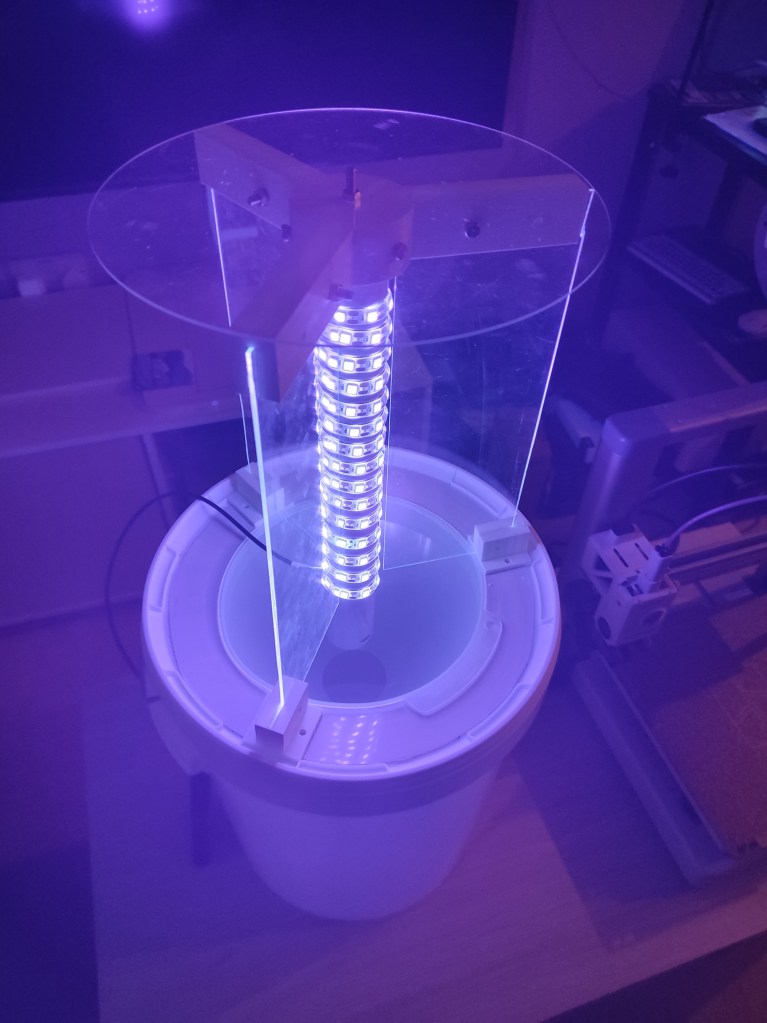
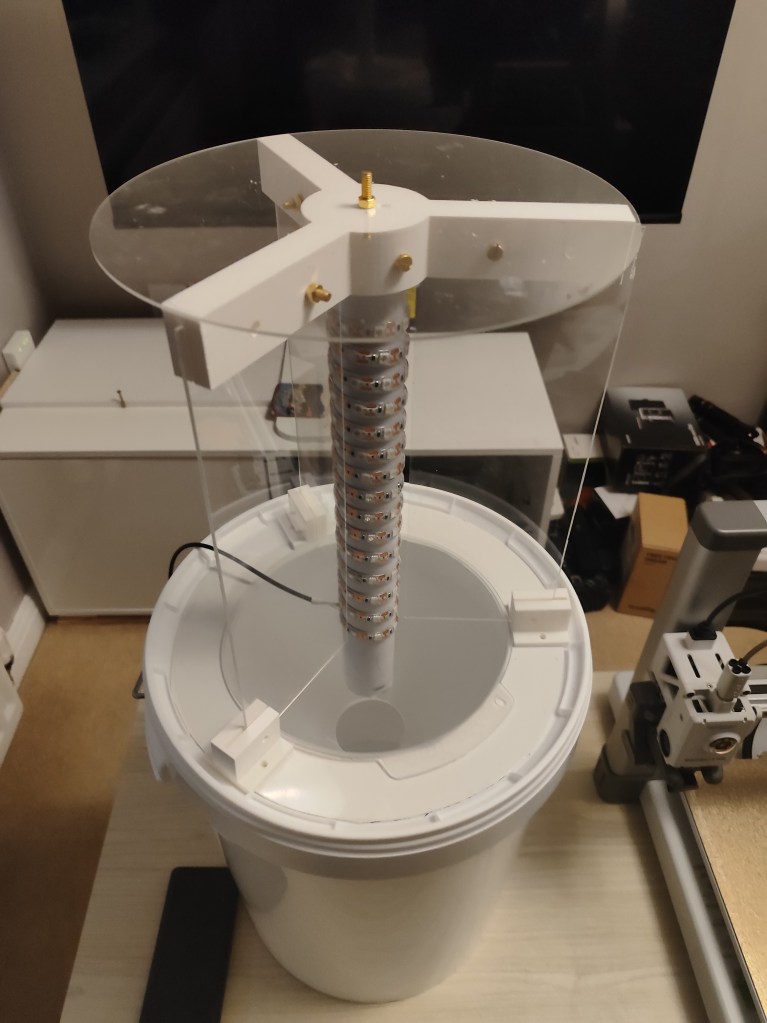
This moth trap is designed using scientifically validated concepts developed by Dutch Butterfly Conservation and UK Centre for Ecology and Hydrology. It is a low-cost (under £70) and portable DIY moth trap powered by a standard power bank. The design consists of two main components, most of which can be purchased from online marketplaces or local hardware stores (with the exception of the 3D-printed parts):
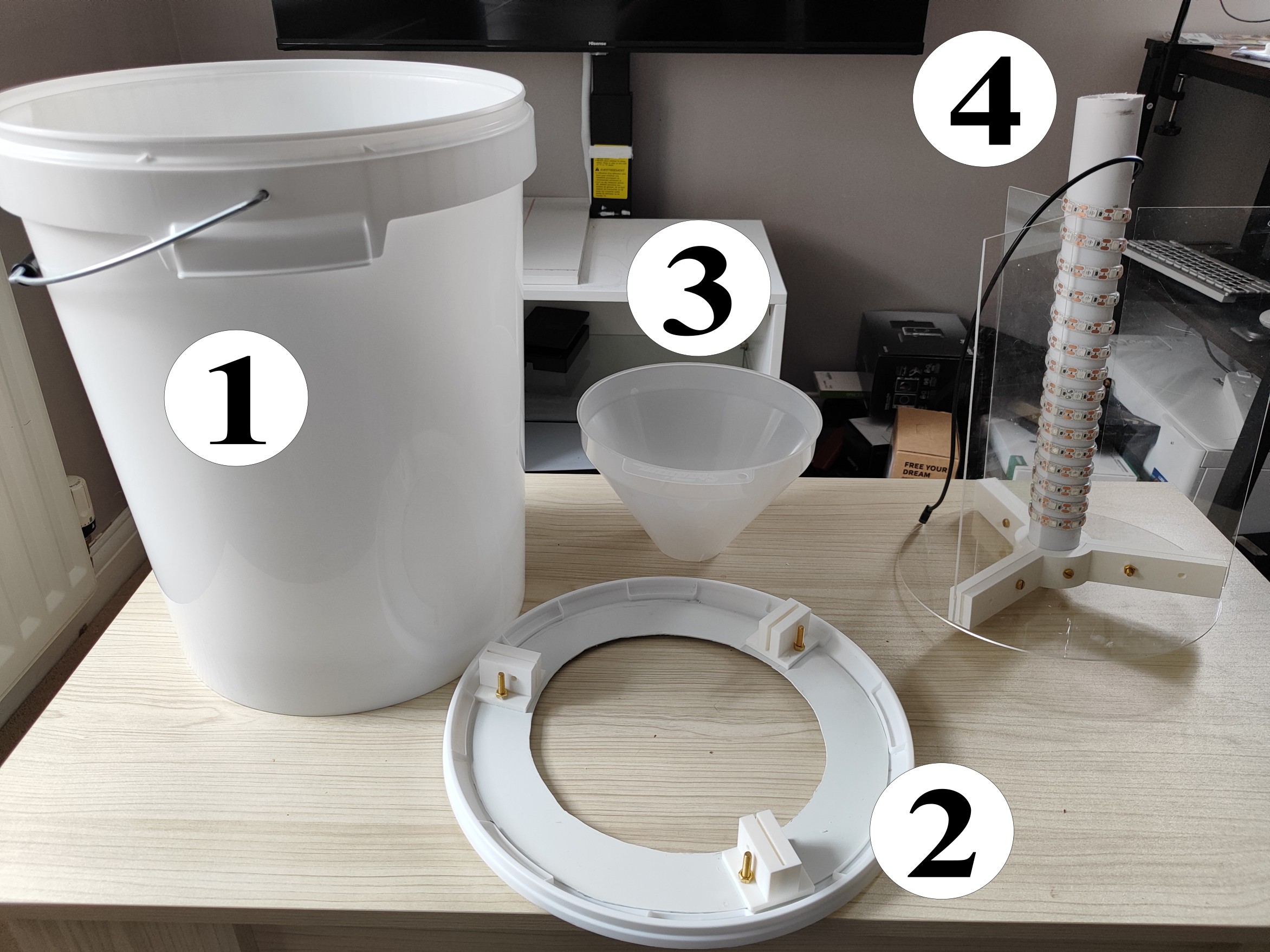
- A storage compartment for captured moths and other nocturnal insects.
We used 27-litre bucket (1) for this design. However, any 25–30-litre bucket can be used for this purpose. Keep in mind that lightweight buckets may need to be secured to the ground or weighted down to prevent tipping.
Cut a round hole in the lid (2) and insert a funnel (3). The funnel helps guide captured moths into the bucket for safe containment. You can use any funnel available at your local hardware store (cheaper) or funnels from commercial moth traps. Fill the bucket with egg cartons to create a textured, three-dimensional environment that mimics natural resting surfaces such as tree bark. This structure provides secure hiding spaces and encourages moths to remain calm and settled after being attracted by the light.
- Energy-efficient UV LED lighting to attract moths (4).
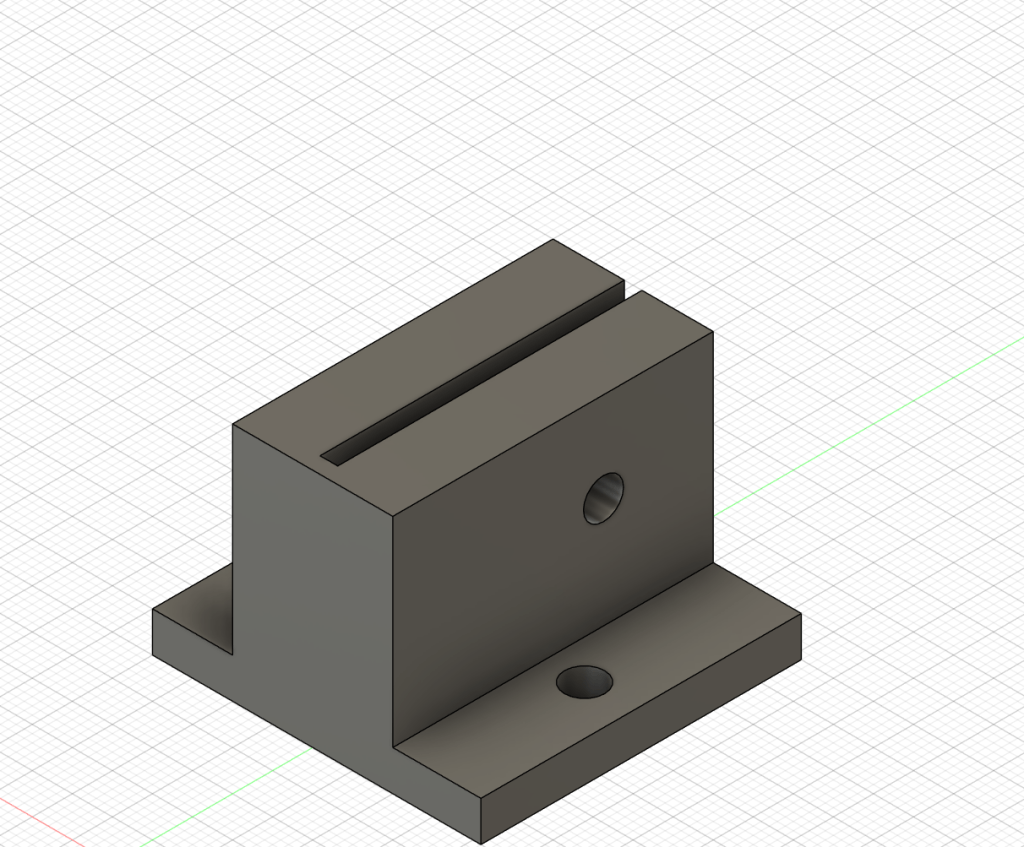
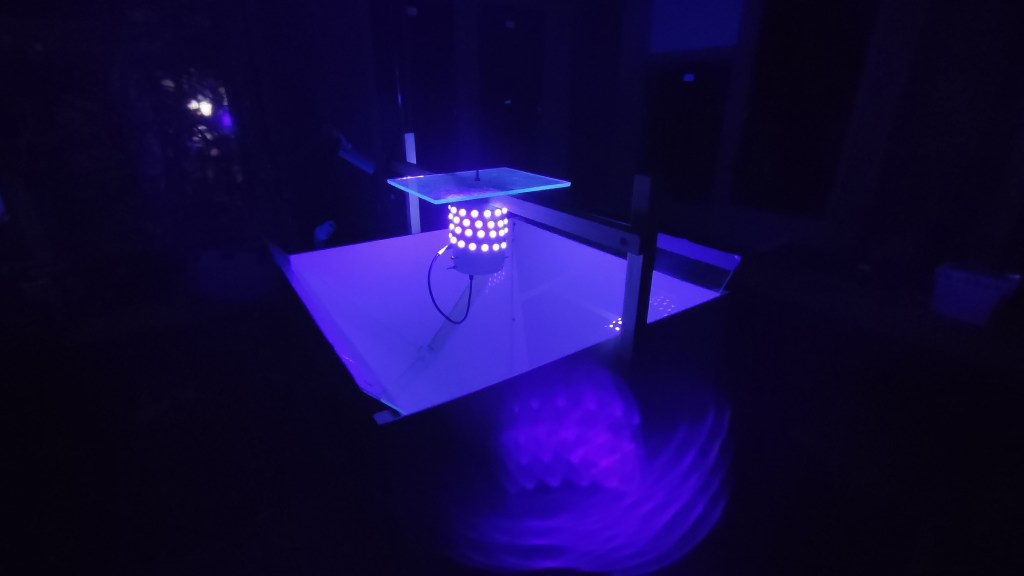
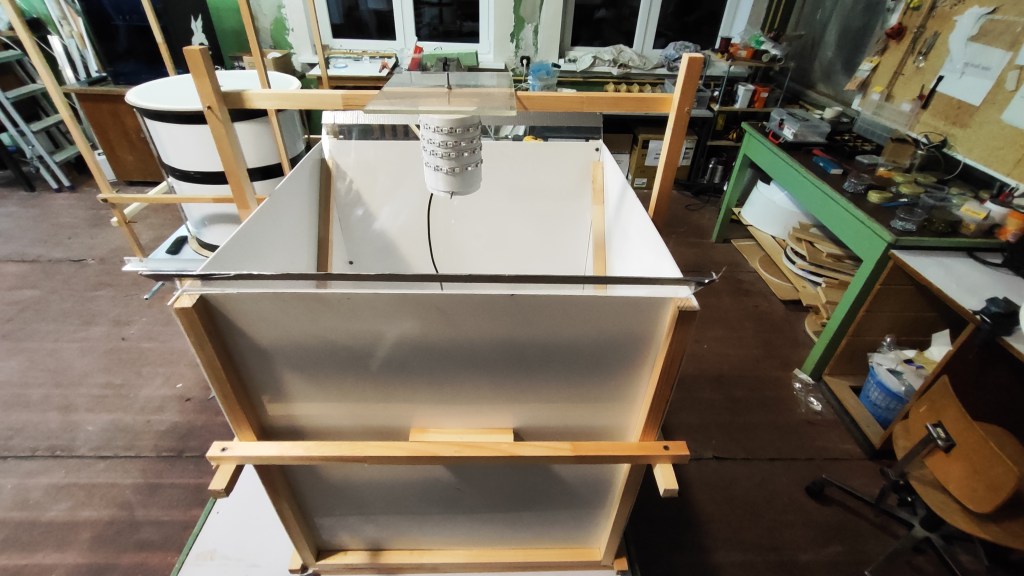
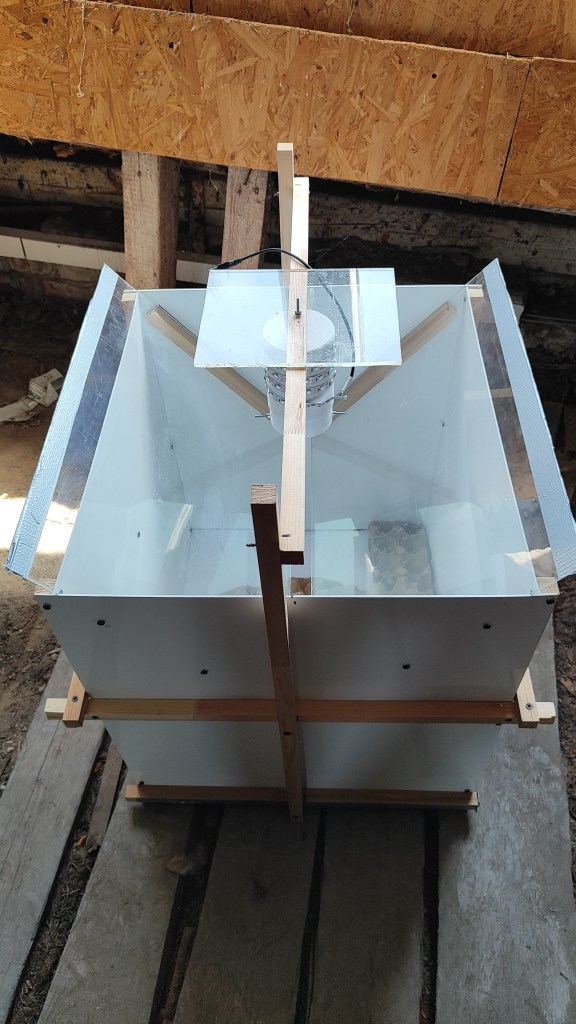
You can use a waterproof UV LED strip (0.5-2 m length) which is readily available on Ebay, Amazon or Aliexpress. For more information about different light sources and how they affect the efficiency of moth trapping, please see our Moth Trapping and Catching articles. The UV LED strip is wrapped around a 35 cm PVC tube (41 cm diameter), which is mounted to a 3D-printed 3-arm clamp bracket (see image below). Note: A non-waterproof LED strip can be used protected with an electro-preservative coating. This is preferable to waterproof encapsulation, as default waterproof layers can absorb part of the UV radiation emitted by the LEDs.
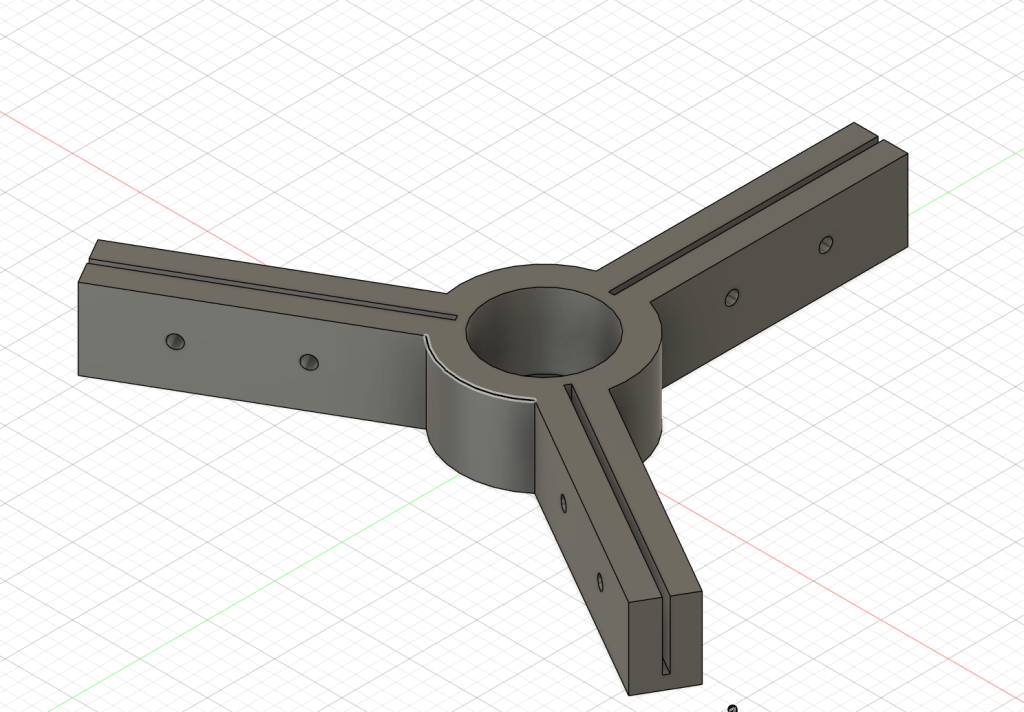
Three clear acrylic plates (30 cm long and 10 cm wide), cut from A4 acrylic sheets using a specialized cutting knife, are attached to this bracket. These plates help intercept approaching moths and guide them toward the funnel.
The upper part of the bracket is covered with a 25 cm circular acrylic plate, which serves as a rain shield. To stabilize the construction on the bucket, three 3D-printed holders are attached to the bucket lid (2).
The LED strip is powered by external power banks (e.g., Anker 20,000 mAh). The power banks are stored in small waterproof enclosures (one or two veriosn) attached to the bucket or positioned nearby.
You can enhance this setup by adding a light-sensor switch, which automatically turns the light on after sunset and off at sunrise.
Alternatively, you can build a solar-powered power bank for the trap, eliminating the need to recharge or replace the power source every night.
 magbbb.com